Latest News

2026 Year-End Tax Planning Guide – Part 1
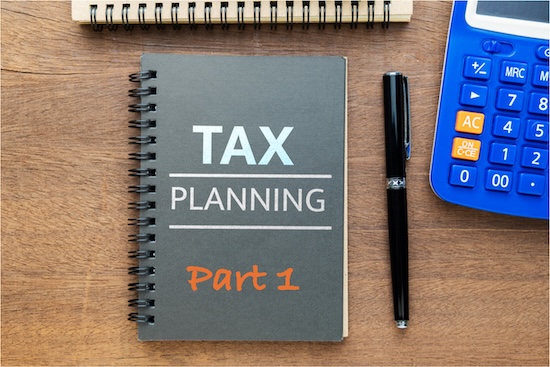
As the end of the financial year approaches, now is the ideal time to review your tax position and consider strategies that may help minimise tax and improve cash flow.

.

We recommend preparing an estimate of your taxable income for the year ending 30 June 2026. This can help identify any expected tax liabilities and highlight opportunities to legitimately reduce or defer tax.

It’s also worth reviewing your current income and deductible expenses to determine whether it may be beneficial to:

  • bring forward deductible expenses before 30 June; or
  • defer income until after 1 July 2026 where practical.

The strategies below are general in nature and may not suit every taxpayer. Their effectiveness will depend on your personal circumstances, business structure, turnover, and accounting method (cash or accruals). Importantly, some strategies require time to implement, so early planning is essential.

Tax Planning Opportunities to Consider

1. Deferring Assessable Income

In some situations, delaying income recognition until after 30 June 2026 may reduce your current year tax liability.

Possible strategies include:

  • Delaying invoicing for incomplete work until after 1 July
  • Deferring receipt of income where operating on a cash basis
  • Postponing receipt of lump sum payments where possible
  • Reviewing whether certain passive income streams (such as rent or interest) can be delayed

Where cash flow permits, this approach may help move taxable income into the next financial year.

2. Bringing Forward Deductible Expenses

Depending on your circumstances, it may be worthwhile prepaying certain expenses before 30 June 2026 to bring forward tax deductions into the current year.

Potential deductible prepayments include:

  • Superannuation contributions
  • Wages, bonuses, and contractor payments
  • Rent and lease costs
  • Insurance premiums
  • Accounting fees
  • Advertising and subscriptions
  • Utilities and office expenses
  • Motor vehicle costs
  • Repairs and maintenance
  • Self-education expenses
  • Home office equipment
  • Donations to deductible gift recipients

Superannuation Contributions

To claim a deduction for super contributions in the 2025/26 financial year, contributions must be received by the super fund before 30 June 2026.

Some low and middle-income earners may also qualify for a government super co-contribution when making personal after-tax contributions.

Prepaying deductible investment loan interest may also be worth considering in some circumstances.

As always, tax planning should align with genuine business or investment.

3. Capital Gains Tax Planning

When selling assets, remember that the contract date — not settlement date — generally determines when a capital gain or loss arises for tax purposes.

Key CGT Considerations

  • Assets held for more than 12 months may qualify for the 50% CGT discount for individuals.
  • Deferring the sale of an asset with an expected gain until a later financial year may reduce current year tax.
  • Capital losses can be used to offset capital gains and reduce tax payable.
  • Bringing forward the sale of loss-making assets may assist where gains have already been realised.

CGT Discount Rules for Individuals

For assets acquired after 21 September 1999:

  • Held less than 12 months → tax applies to 100% of the gain
  • Held 12 months or more → generally only 50% of the gain is taxable

Any capital gain is assessable in the financial year the CGT event occurs. Remember also that the 2026-27 Federal Budget outlined how the Federal Government is looking to change the way CGT is assessed in future years. Make sure you are aware of these changes.

4. Accounts Payable and Accrued Expenses

Businesses operating on an accruals basis should ensure all deductible expenses incurred before 30 June 2026 are properly recorded.

This may include ensuring supplier invoices are dated on or before 30 June so the deduction can be claimed in the current financial year.

Final Reminder

Effective tax planning takes time and should be tailored to your individual circumstances. Acting early provides greater flexibility and helps avoid rushed decisions at year-end.

If you are unsure which strategies may apply to you or your business, seeking professional advice before 30 June is strongly recommended.

Instant Asset Write-Off & Temporary Full Expensing

The instant asset write-off threshold for eligible small businesses remains at $20,000 for the 2026 financial year.

To qualify for the write-off, the following conditions generally apply:

  • The deduction applies to eligible plant, equipment, and motor vehicles only — it does not extend to capital improvements on buildings.
  • Both new and second-hand assets may qualify.
  • Assets can be purchased outright or financed.
  • The business must be actively operating during the 2026 financial year.
  • Aggregated annual turnover must be below $10 million.
  • The business must apply the simplified depreciation rules.
  • Each individual asset must cost less than $20,000.
  • The asset must be installed and ready for use between 1 July 2025 and 30 June 2026.

Importantly, businesses that opt out of the simplified depreciation regime will not be eligible for the instant asset write-off, even if they meet the other requirements.

The $20,000 threshold applies on a per asset basis, meaning multiple eligible assets may be immediately deducted provided each one falls below the threshold.

Assets costing $20,000 or more can still be added to the small business depreciation pool and depreciated over time — generally at:

  • 15% in the first year; and
  • 30% in later years.

Additional Tax Planning Opportunities for Businesses

Stock Valuation

Before 30 June, businesses should review stock on hand and work in progress to ensure inventory is valued correctly.

Stock should generally be recorded at the lower of:

  • cost; or
  • net realisable value.

Where stock cannot realistically be sold for its recorded value, it may need to be written down.

Superannuation Contributions

To claim a tax deduction for super contributions in the 2025/26 year, the funds must reach the super fund before 30 June 2026.

Electronic transfers made on 30 June may not clear in time, so contributions should ideally be processed several days earlier to avoid missing the deduction.

Writing Off Bad Debts

Businesses using the accrual accounting method should review outstanding debtors before year-end.

Amounts considered genuinely unrecoverable should be formally written off in the accounting records before 30 June 2026 to claim a deduction in the current financial year.

Repairs and Maintenance

Where practical and cash flow permits, consider completing deductible repairs before year-end.

It is important to distinguish between:

  • repairs and maintenance (generally immediately deductible); and
  • capital improvements (typically claimed over time through depreciation).

Professional advice may be required where the distinction is unclear.

Obsolete Equipment

Old or unused plant and equipment should be scrapped, disposed of, or decommissioned before 30 June 2026 where appropriate.

This may allow the remaining book value to be claimed as a deduction.

Trust Distribution Strategies

Businesses operating through discretionary trusts may wish to consider the use of a “bucket company” to receive trust distributions as part of broader tax planning strategies.

Careful planning before year-end can create valuable tax opportunities while ensuring compliance obligations are met.

Hot Issues

Lawrence Poletto

Lawrence Poletto, Principal of Poletto accounting is a Fellow of CPA Australia, holds a Bachelor of Commerce (JCU) and has over twenty years’ experience in Commercial and Public Practice.
With this experience, Lawrence can assist with all accounting and taxation needs to help clients start and grow their business. Lawrence deals with clients from all walks of life, working with diverse client base across a wide range of Industries. He builds strong trusted relationships and support clients in their times of need.

Lawrence can assist with all Tax and Accounting for small to medium business including assistance and guidance with setups, ongoing support including cloud-based accounting, budgeting, performance monitoring, support for loan applications and more.

Lawrence enjoys working with business owners who are seeking taxation, accounting, or business advice from a trusted professional. The more certainty he can provide his clients, the more they can focus on their business. Clients appreciate Lawrence’s professional and approachable manner.

At Poletto Accounting you will be one of only a limited group of equally important business clients and will always receive prompt, personal service.

We believe in Fixed price packages with easy payment option’s so you know exactly what you’ll be paying.

Contact Poletto Accounting to get a complimentary tax review, to see how we can help you and to get a second opinion on where you are with your business and taxes.

Business Tax

Poletto Accounting provides a full range of business accounting services for small to medium-sized businesses. We work collaboratively with business owners to meet your reporting requirements and regulatory payments and to help you achieve your financial and business goals.

We can assist through:

  • Income Tax Planning & Strategies
  • Preparation of all Business Income Tax Returns and associate Reporting
  • Goods & Services Tax (GST) review
  • BAS compilation and lodgement
  • Small business concessions calculations and advice
  • Liaising and negotiating with the Australian Taxation Office (ATO)
  • Assistance in formation and set-up of companies, trusts and partnerships
  • Corporate secretarial services – ASIC requirements

All clients are provided with an Annual Tax Planning Meeting opportunity.

Contact Us

Business Start Up

We can assist in setting up your new business, provide business advice and planning to give your Business its best chance of success. We can guide you on the following:

  • Decide on the most suitable structure for your business – sole trader, partnership, trust or company
  • Prepare a business plan, cashflow projections, budgets, and trading forecasts
  • We take care of all your legally required registrations such as registering a business name and applying for an Australian Business Number and Tax File Number. You may also need to register for GST and PAYG withholding, workers compensation and more and we’ll let you know if these apply to you
  • Complete registration procedures with Australian Securities and Investments Commission
  • Set up your software and bookkeeping systems

We offer Fast and easy setup for your new business.

Contact Us

Cloud Accounting & Bookkeeping

Need help with your cloud accounting and Bookkeeping system? Not sure which program is best for your business? We can assist with all your cloud accounting needs, whether its Xero or other software.

Poletto Accounting is a Certified Xero Silver partner and can assist with:

  • Assistance with Cloud Software selection and implementation
  • Set-up and installation of XERO, MYOB, Quickbooks and other Accounting Packages
  • We can assist with recommending Bookkeeping Services that will suit your business
  • We also can work with your existing bookkeeper to ensure the most efficient and effective recording of your data and will improve the efficiency of the year-end compliance process

We can help give back time and resources you need to focus on growing and developing your business.

Contact Us

Fixed Price Guarantee

Poletto Accounting believe clients deserve certainty around their accounting services.

Fixed Fee accounting gives you the reassurance of no nasty surprises during the year and a clear understanding of the service.

We won’t charge “on the clock” and you won’t receive unexpected Invoices.

We'll determine your requirements upfront so that you have certainty of cost.

We don’t charge for basic support, emails and phone calls.

Contact Us

ASIC Corporate Compliance

We will make sure your business/company meets all its obligations to ASIC (Australian Securities & Investments Commission).

We can assist with:

  • Preparation of annual company statements
  • Attending to ASIC returns and regular filings on your behalf
  • Any company changes or change of directors
  • Business name registrations and maintenance
  • Renewal of business name/s and other registrations
  • Preparing meeting minutes and drafting resolutions
  • Provision of registered office services for service of notices
  • Preparing minutes and drafting resolutions
Contact Us

Company and Trust Establishment

We offer a personalised service in relation to the establishment of structures for new and existing businesses.

This includes Trusts & Companies to provide suitable asset protection whilst having the best possible tax outcomes.

Each new business is different and your individual circumstances needs to be considered.

If you need advice or help with your decision about your business structure, reach out to arrange a consultation.

Contact Us

Tax Diary

General Calculators


Accounting Videos

Secure File Transfer

Secure File Transfer is a facility that allows the safe and secure exchange of confidential files or documents between you and us.

Email is very convenient in our business world, there is no doubting that. However email messages and attachments can be intercepted by third parties, putting your privacy and identity at risk if used to send confidential files or documents. Secure File Transfer eliminates this risk.

Login to Secure File Transfer, or contact us if you require a username and password.

Disclaimer

Every effort has been made to offer the most current, correct and clearly expressed information possible within this site. Nonetheless, inadvertent errors can occur and applicable laws, rules and regulations may change.

The information contained in this site is general and is not intended to serve as advice. No warranty is given in relation to the accuracy or reliability of any information. Users should not act or fail to act on the basis of information contained herein. Users are encouraged to contact Poletto Accounting or their own Advisor for Advice concerning a specific matter before making any decision.

Terms & Conditions

Lorem ipsum dolor sit amet, consectetur adipiscing elit. Nullam velit nisi, rutrum sed tristique vel, congue nec dui. Class aptent taciti sociosqu ad litora torquent per conubia nostra, per inceptos himenaeos. Etiam non ante eu augue finibus gravida ac vel risus. Aenean fringilla cursus ipsum, mattis posuere enim dignissim vitae. Nulla facilisi.

Donec ac varius tellus. Integer ultricies placerat augue, vel cursus lorem euismod eget. In ex tellus, egestas eu dui eu, lobortis hendrerit est. Donec libero est, placerat et blandit non, fermentum a risus. Morbi aliquam lobortis mauris ut tincidunt. Aenean sollicitudin metus nec nulla lobortis consectetur.

Privacy Policy

Poletto Accounting is committed to providing quality services to you and this policy outlines our ongoing obligations to you in respect of how we manage your Personal Information.

We have adopted the Australian Privacy Principles (APPs) contained in the Privacy Act 1988 (Cth) (the Privacy Act). The NPPs govern the way in which we collect, use, disclose, store, secure and dispose of your Personal Information.

A copy of the Australian Privacy Principles may be obtained from the website of The Office of the Australian Information Commissioner at https://www.oaic.gov.au/.

What is Personal Information and why do we collect it?

Personal Information is information or an opinion that identifies an individual. Examples of Personal Information we collect includes names, addresses, email addresses, phone and facsimile numbers.

This Personal Information is obtained in many ways including correspondence, by telephone and facsimile, by email, via our website www.polettoaccounting.com.au, from your website, from media and publications, from other publicly available sources, from cookies and from third parties. We don't guarantee website links or policy of authorised third parties.

We collect your Personal Information for the primary purpose of providing our services to you, providing information to our clients and marketing. We may also use your Personal Information for secondary purposes closely related to the primary purpose, in circumstances where you would reasonably expect such use or disclosure. You may unsubscribe from our mailing/marketing lists at any time by contacting us in writing.

When we collect Personal Information we will, where appropriate and where possible, explain to you why we are collecting the information and how we plan to use it.

Sensitive Information

Sensitive information is defined in the Privacy Act to include information or opinion about such things as an individual's racial or ethnic origin, political opinions, membership of a political association, religious or philosophical beliefs, membership of a trade union or other professional body, criminal record or health information.

Sensitive information will be used by us only:

Third Parties

Where reasonable and practicable to do so, we will collect your Personal Information only from you. However, in some circumstances we may be provided with information by third parties. In such a case we will take reasonable steps to ensure that you are made aware of the information provided to us by the third party.

Disclosure of Personal Information

Your Personal Information may be disclosed in a number of circumstances including the following:

Security of Personal Information

Your Personal Information is stored in a manner that reasonably protects it from misuse and loss and from unauthorized access, modification or disclosure.

When your Personal Information is no longer needed for the purpose for which it was obtained, we will take reasonable steps to destroy or permanently de-identify your Personal Information. However, most of the Personal Information is or will be stored in client files which will be kept by us for a minimum of 7 years.

Access to your Personal Information

You may access the Personal Information we hold about you and to update and/or correct it, subject to certain exceptions. If you wish to access your Personal Information, please contact us in writing.

Poletto Accounting will not charge any fee for your access request, but may charge an administrative fee for providing a copy of your Personal Information.

In order to protect your Personal Information we may require identification from you before releasing the requested information.

Maintaining the Quality of your Personal Information

It is an important to us that your Personal Information is up to date. We will take reasonable steps to make sure that your Personal Information is accurate, complete and up-to-date. If you find that the information we have is not up to date or is inaccurate, please advise us as soon as practicable so we can update our records and ensure we can continue to provide quality services to you.

Policy Updates

This Policy may change from time to time and is available on our website.

Privacy Policy Complaints and Enquiries

If you have any queries or complaints about our Privacy Policy please contact us at:

enquiries@polettoaccounting.com.au

0417 913 544